
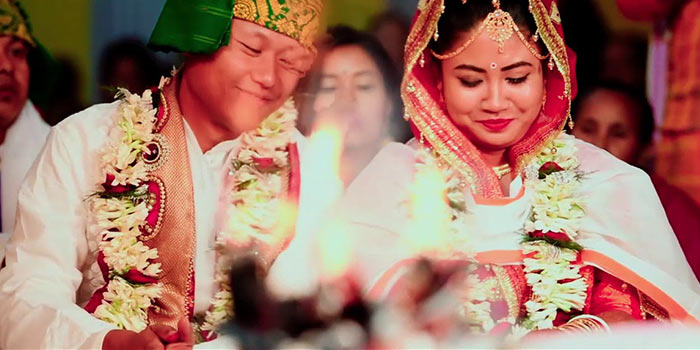
Other Spellings / Synonyms : Bodos, Bodo People, Boros
Clans : Bodos are divided into a number of clans such as Basumatary, Bodosa, Boro, Brahma, Bwiswmuthiary, Dwimary, Goyari, Ishlary, Ishwary, Khaklari, Mushahary, Narzary, Owary, Sargwary, Sibigri and Wary.
Religion : Bathow is the primary faith, along with Hinduism and Christianity.
Language : Bodo and its dialects Chote, Mech
Regional Spread : The Bodo people are concentrated mostly in the north-western parts of Assam in India. Bodos are also present in Nepal.
Traditional Occupation : Agriculture, silkworm rearing, weaving
Population : Bodos are the 8th largest tribal group in India, with Bodo being spoken by about 0.8 million people.
Food Habits : Bodos are traditionally non-vegetarians. Rice is a staple of the Bodos and is often accompanied by a non vegetarian dish such as fish or pork. The traditional favourite drink of the Bodos is Zu Mai- Zu meaning beer, and Mai meaning rice.
Marriage Preference : Seek marriage alliances within their own community. Hindu practices such as caste and dowry are not practiced by the majority of Bodo Hindus.
Famous Personalities : Upendra Nath Brahma - Father of the Bodos (Bodo-Fa)
Bodos, also called the Boros, are an ethnic community that is concentrated mostly in the north-western parts of Assam in India. The Bodos are the largest tribe of the Brahmaputra valley. They are said to belong to a larger classification of ethnicity called the Bodo-Kachari. The nerve center of the Bodos is Kokrajhar town.
The Bodos began their struggle for self-determination in 1989. After a prolonged struggle to promote and develop Bodo culture and identity, the Bodos have today been granted the Bodoland Territorial Council, and autonomous administrative body that will have within its jurisdiction the present district of Kokrajhar and adjoining areas.