A number of interesting and colorful ceremonies mark a traditional Bengal Wedding. Read on to know all about pre-wedding, wedding and post wedding customs of a typical Bengali wedding.
Engagement Ceremony
There are specific rituals for engagement in a Bengali Wedding. At first a family priest reads the ancestral lines of the to ensure that marriage does not take place between close relatives or persons having the same gotra or lineage. The custom is known as Adan Pradan (give and take). Thereafter, groom's family visits the bride's family and finalizes the dates for marriage. The ritual is called Paka-Dekha. This is followed by an Aashirwad or Patri Patra ceremony, which involves confirmation of the marriage alliance. It takes place a couple of days before the wedding. The ceremony is conducted by a purohit at the residence of the bride or the groom.
Pre-Wedding Rituals of a Bengali Wedding
A typical Bengali wedding involves following rituals:
- - Wedding Piris:The piris are brought to the bride's house a day before the wedding or on the wedding day. These piris are used to seat the bride and the groom during the wedding ceremony. A relative or friend paints and decorates the piris, conch shells are blown and ululation taken up.
- - Vridhi : Vridhi ceremony is performed a day before the marriage and is attended by all family members. Rituals for Vridhi involve offering of puja to the ancestors of the bride and the groom. Following the rituals, alpana or rangoli is done and on it is placed a ghot with amra pallab. All puja items are arranged in a baran dala (silver plate) with a 'Sri' symbol made on it. The priest brings an idol of Bhagwan Narayan to the puja. The idol is worshipped by lighting of agarbattis (incense) and diyas (lamps). The vridhi is usually performed by a paternal uncle. Custom demands that the uncle and the bride/groom be on a liquid diet.
- - Dodhi Mangal : Dodhi Mangal is performed in the house of the bride and the groom at the crack of the dawn of the wedding day. About ten married women accompany the bride/groom to a nearby pond. This is done to invite the Goddess Ganga to the wedding. Women bring back a pitcher of water from the pond to individually bathe the bride and the groom. They then offer food to the bride/groom. The meal consists of macher laija bhaja (fried fish) followed by jal dhala bhaja (rice cooked in water). Curd and chiruya complete the meal.
- - Gae Halud Tattva: A relative of the groom arrives at the bride's house with Gae halud tattva (gifts) for the bride. The gifts include at least six saris and cosmetics to go with them. Also among the gifts are fish, assorted sweets, curd, paan, dhaan and durba. Incense is lit to welcome them and conch shells are blown. The bearers are given sweets and gifts.
- - Adhibas Tattva : Adhibas Tattva are gifts coming from the bride's house. These include a saree for the groom's mother, fish, sweets, curd, paan, dhaan, and durba. The gifts come on a brass plate or kasar thala borne by servants.
- - Kubi Patta: Kubi Patta is a ceremony to revere Saint Kuber. This takes place in the houses of the bride and the groom on the day of the marriage. Carrying out the ritual family members place three metal glasses filled to the brim with dhaan, khoi (pulses) and crushed rice at the altar of the Saint.
- - Snan : The snan takes place in the late afternoon or evening, the bride and groom must individually follow on the day of the wedding. A few married women apply turmeric and oil on the hair and body of the bride/groom. After bathing, the bride and groom must wear the new set of clothes that have been presented to them by their in-laws.
- - Sankha Porana : In her maternal home the bride follows the tradition of wearing sankha pola or conch shell which are white and red bangles that have been dipped in turmeric water. Ritual goes that after a bath bride wears a new sari along with the sankha pola.
- - Sringar of the Bride The bride adorns herself in all her bridal finery. Her hair is tied into a bun and covered with a veil. The mukut is placed on her head and secured in place by pinning it to the veil. After her bridal makeover, a design of the mukut is traced on her face using the chandan paste. The bride must sit with the gaach kouto and kaajal laata for the ceremonies that follow.
- - Mandap : The mandap is the place where the wedding ceremony is conducted. In a typical Bengal wedding two banana trees are planted at the mandap and a large alpana is made with rice paste. The mandap is decorated for the event with flowers and lights.
Wedding Rituals
Here, we shall present a brief description of the various steps of Bengali Wedding.
- Welcoming of the Groom : At the bride's house, the groom and his relatives are greeted with the ceremonial ringing of bells, blowing of conch shells and ululation. The baran dala is held by an elder female relative of the bride's and the plate is first touched to the groom's forehead, then to ground, and back again to his forehead in a gesture of part blessing, part-reverence. The groom is offered sweets and sherbet. Water is sprinkled on the doorstep as the groom steps into the house to mark the auspicious moment.
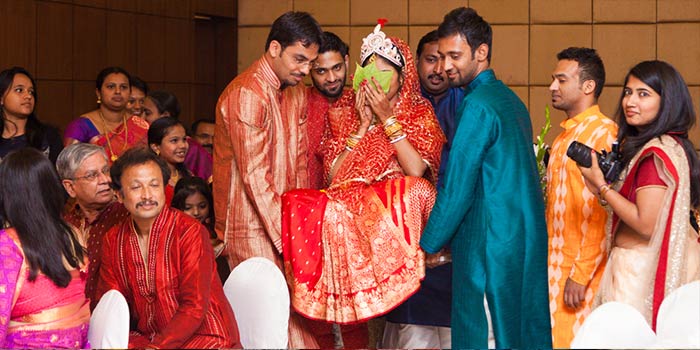
- The Wedding Ceremony : An interesting feature of the Bengali wedding is that the bride is carried to the marriage altar on the shoulders of her uncles amidst much revelry, conch-blowing and clapping. The purohit conducts the wedding ceremony. The bride and groom exchange garlands while the purohit chants mantras. Following the custom called sampradhan paternal or maternal uncle gives the bride away.
Post-Wedding Rituals
Given here is a description of some of the most commonly observed post-wedding rituals of a Bengali wedding.
- Basar Ghar : The bride and groom are welcomed inside the bride's home. There is merry making and the couple is served dinner. Jokes and poetry recitals by friends and relatives keep the couple awake all through the night.
- Bashi Biye : The next morning, the groom adorns the forehead of his bride with vermillion. He does this by looking into a mirror. The newly wed couple visits the mandap and worships the Sun God in the presence of a priest.
- Bidaai Ceremony : This ceremony marks the departure of the bride and groom. From here they set off for the groom's home. The newly weds are blessed by the elders.
- Bou Baran : This ritual is performed to welcome the bride and groom to the latter's home. The women of the house pour water on the ground beneath their vehicle when they alight. The groom's elder brother's wife holds a plate containing lac dye and milk under the bride's feet. Having imprinted the soles of her feet thus, she leads her by the arm into the house. The elders of the house bless the newly weds.
- Bou Bhat : The first meal served by the new bride is called bahubhat. This is a time of accepting her with respect in her new family and for her to know her new relatives. This ceremony is followed by a reception in the evening, hosted by the groom's father.
- Phool Sajja or Flower Decoration : The last of the wedding ceremonies, this occasion sees the bride in a new sari and the groom in a new dhoti and kurta. Their nuptial bedroom is beautifully decorated with flowers, which is why the term, phool sajja. The flowers, clothes and sweets for the occasion usually arrive as gifts from the bride's house.
- Dira Gaman : Dira Gaman ceremony is conducted when the newly-weds visits the bride's house for the first time after the wedding. The thread that was tied by the purohit on the bride's wrist during the wedding rituals is cut during this ritual. Conch shells are blown to the accompaniment of ululation to mark the auspicious moment.