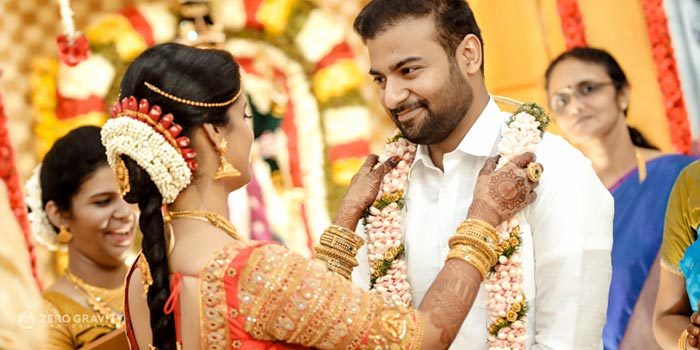
Kannada Weddings are a relatively simple but joyful affair. It may be noted that there are different communities in Karnataka and there are some differences in the wedding rituals followed by each of them. Given here is a general description of a typical wedding in Karnataka.
Pre-Wedding Rituals
Some very interesting pre-wedding customs are followed in Kannada wedding. Please read on to know more about them.
- - Nischay Tamulam or Fixing of the Alliance:Once the parents of the prospective bride and the groom agree to the match, the alliance is formalized with a plate of betel leaves and supari. The parents of the boy go to the bride's home and give her a sari, blouse piece, coconut and fruits. The girl's parents give the boy a dhoti, coconut and fruits. A priest chants mantras. He also matches the horoscopes of the boy and the girl to fix the date and time of the wedding.
- - Nandi : This ceremony is performed a few days prior to he wedding to ensure that the marriage takes place without any hitches/problems. There is a puja with coconut, aarti and a kalash (copper pot). The first invitation card is offered to God.
- - Havan : On the day of the marriage, a havan is performed in the respective houses of the bride and the groom.
- - Wedding Attire : In a typical Kannada marriage ceremony, the bride wears Navari sari and green glass bangles along with traditional gold jewelry. The bridegroom wears a dhoti, angavastram and a pheta, a turban. In his right hand he holds a stick which has been sanctified in a holy place.
- - Departure of the Groom's Party : After bowing to the elders, gods, goddesses in the house and taking their blessings, the groom with his wedding party proceeds towards the wedding venue.
- - Welcoming of the Barat : When the groom and his party reach the wedding venue, the sumangalis or married women from the girl's side perform an arti. Then these sumangalis lead the bridegroom inside the marriage hall.
- - Kaashi Yatre : This is a playful ritual with the groom pretending to get angry as nobody is searching for a bride for him and threatens to go to Kashi on a pilgrimage. He carries a walking stick, an umbrella, a fan, a coconut, a small packet of rice and dal, and a dhoti. This is when his maternal uncle convinces him and puts forth him the girl that he has chosen for him or would offer his daughter's hand for marriage.
Wedding Rituals
Given here is a short description of the significant rituals of the Kannada wedding
- - Mandap Puja : On the day of marriage the first ritual that is performed is the Mandap Puja. This is to make the mandap or the hall in which the marriage is to take place, appropriate for an event as sacred as a marriage. The bride's father brings the groom to the mandap and is worshipped in a ceremony called the Var Puja. The bride's parents honour him by washing his feet and offer him a silk dhoti and pitambar, which are to be worn by him.
- - Jaimala or the Garlanding Ceremony : In the Kannada wedding, the bride is escorted to the mandap by her uncles. An interesting custom followed is that no one is supposed to see the bride's face. Her sister shields her face with a fan of peacock feathers. The bride and groom stand on the either side of a white cloth, which separates them. For the recitation of the marriage mantras (Mangalashtam), the bride and the groom take standing positions. The cloth is removed, and the bride and groom garland each other amidst the chanting of mantras.
- - Dhare Herdu or the Giving Away of the Bride : In Dhare Herdu, the bride's father gives away the bride to the groom. He takes the groom's hand and places it on the bride's hand. The moment when the bride is "handed" over to the groom, her father ceremonially pours water into the groom's hands (called dhara), signifying that she is now his. Corn/rice is then put into the havan five times, before the 7 pheras or the saptapadi begins.
- - Saptapadi : The groom's angavastram and the bride's pallav is tied with a nuptial knot. The bride follows the groom's footsteps seven times around the holy fire (saptapadi). Five married women tie the mangalsutra or the holy thread while the bridegroom holds it around the neck of the bride. The couple then bows before the elders, and visits the temple for blessings.
Post-Wedding Rituals
Post - wedding rituals of a traditional Kannada Wedding are quite simple and include the following:
- - Vidaai : Vidai ceremony marks the tearful farewell of the bride from her paternal home for her husband's house. The parents of the bride gift her an umbrella, vessels, cot etc. to help her set up her new home. In Kannada wedding, the bride is accompanied by her brother who stays at the groom's house for the night and returns home the next day.
- - Graha Pravesh : Welcome of the bride into her new home is called Graha Pravesh. The bride kicks a kalash full of rice with her right foot kept at the threshold of the house. This is followed by the name change ceremony. Here the groom decides a name for his bride he inscribes with a ring on a plate containing rice. On the second day the bride's family comes to take the newly wedded bride and the groom to their house. The couple stays at the bride's place for a few days. Later, the groom's family goes over to his in-laws place to fetch the bride and the groom.