
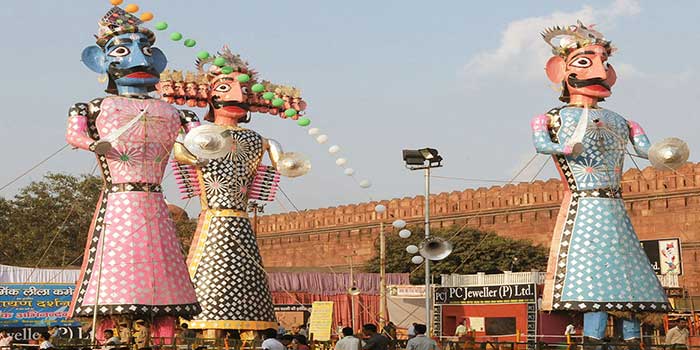
Dussehra or Vijayadashmi is celebrated across India and follows the nine day festival of Navratas. On this day effigies of Ravana (King of Lanka), his brother Kumbhkaran and son Meghnad are burnt by people across India. The country witnesses huge Ramleela (Narration of tales of Lord Rama) functions which are basically stage plays spread over many days and depicting the life of Lord Rama. The last day of the Ramleels sees the burning of the three effigies as mentioned above symbolising the victory of Good over Evil.
This festival has immense mythological significance. As per Ramayan, Ram did Chandi-Puja and invoked the blessings of Durga tokill Ravana, the ten-headed king of Lanka who hadabducted Sita. Durga divulged the secret to Ram howhe could kill Ravana. Then after vanquishing him, Ram with Sita and Laxman returned victorious to his kingdom of Ayodhya.
Dussera can also be interpreted as "Dasa-Hara", which means the cutting of the ten heads of Ravana. The 'Ramleela', a folk play, retelling the story of the life of Rama, is enacted for the nine days of Navratri ending on Dussera, the day Rama slays Ravana. Songs are sung in praise of Rama and people in thousands witness this traditional theatre with its exaggerated costumes, jewelry, makeup and drama. Effigies of Ravana are set ablaze, signifying the victory of good over evil. In modern times it calls for efforts to destroy the demon of our ego, and radiate peace and love.