
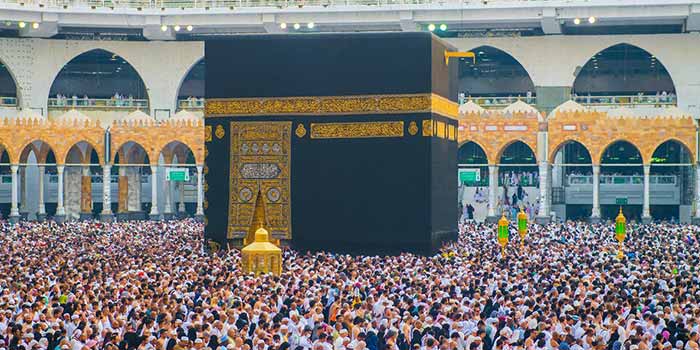
Islam is also a world religion with a following of nearly 1/5th of the universal population. Youngest of three monotheistic religions, Islam is preached in every nation, race, and color. of Arabic origin, Islam means "submission of one's will " to the only true god worthy of worship "Allah" and anyone who does so is a Muslim. Submission to Allah is necessarily with heart, soul and death. Islam also implies "peace' which is the natural consequence of Allah. A Muslim should strictly avoid worship any other God except Allah. Salaam Alaykum (peace be with us) is the universal greeting among the Muslims.
Born in Mecca in circa 540 AD, Prophet Muhammad is believed to have received verbal relevations' from Allah as the 'messenger of Allah'. Around 650 AD, all these relevations' were written down in Koran. Today, Muslims believe Quran or Koran as the divine relevation of God himself.
Early Islam became a basis of Arab unity. All warring tribes evolved into a federation which later defeated the Byzantine and Persian Empire. Islam rapidly spread into Middle East, Europe, major parts of Asia such as China, The Indian sub-Continent, Malay, Africa and other areas as well.
Islam is strictly wedded to monotheism. Allah is the only God and has no partners. Worships directed at saints, prophets and other human beings are considered idolatry. Islamic doctrines are based on 4 fundamental principles or Usul; Quran or Koran, Sunnah (Traditions), Ijma (consensus) and Ijtihad (Individual thought).
Basic 5 pillars of Faith in Islam are; Shahada (affirmation), Salat (prayer), Zakat (alms-giving), Siyam (fasting) and Hajj (pilgrimage). It is mandatory to offer prayers dutifully and respectfully, donate for charitable purposes, observe fasts during month of Ramadan and perform Hajj.
Islam is generally considered as the religion of peace. Three basic Islamic principles of building a "culture of peace" are compassion, forgiveness and respect for all. All are brothers and sisters and considered as the creation of the only god.
Originally, only two festivals existed in accordance with Islamic Law, the Eid-ul-fitr after the fasts of Ramadan and Eid-ul-Adha, coinciding with pilgrimage to Mecca. However, many more festivals are celebrated to commemorate events (particularly religious) which are considered meaningful.
Holy places of Muslims include Medina and Mecca where every Muslim must visit once in a lifetime.