
Introduction
The festival of Shab-E-Barat is celebrated with pomp and enthusiasm by
Muslims all over the world. For, Muslims believe that on the night of
Shab-E-Barat god writes the destinies of all men for the coming year by
taking into account the deeds committed by them in the past.
The festival is celebrated held either on the thirteenth or on the
fourteenth day of Shaban, the eighth month of the Muslim year. This happens
to be fifteen days before the beginning of Ramadan.
Shab-E-Barat means the night of forgiveness or Day of Atonement. People
pray to god both in preparation for Ramadan and for the forgiveness of the
sins committed by them. The festival is also known as Boraks Nigh.
In Persian language, Shab means night and Barat
means the night of commission or assignment. In Arabic language,
however, the day is known as Lailatul Bara'at, meaning the night of
emancipation. Some though see Shab-E-Barat as the night of good fortune and
a popular legend says that on this night the Prophet visits each house and
relieves the pains of suffering humanity.
The night of Shab-E-Barat also commemorates the entry of Muhammad into the
city of Mecca. However, Shia Muslims associate this night with the birth of
their last Imam.
Celebrations
Skies light up on the night of Shab-E-Barat as the festival is celebrated
in the night. Houses and streets are are also illuminated by candles and
strands of electric bulbs to provide a joyful ambiance to the festival.
Colourful fire works keep dazzling the skies as the Muslims stay awake on
the night of Shab-E-Barat. This is due to a belief that god writes the
destinies of all living beings for the coming years in heavens during the
night.
Sweets, specially the delicious savaiyyan or the vermicelli is prepared and
sent to friends and also to the relatives in their remembrance of those who
died during the year. Some also perform acts of charity by distributing
goodies to the poor and needy in the name of their deceased ancestors.
Flowers are also offered to the graves of the deceased family members.
Fatiha or the blessings are recited over the meal in the name of the
Prophet, his daughter Fatima and her husband Ali. The Holy Book of Quran is
also read to mark the day. Muslims hold a belief that if someone prays to
Allah throughout the night and seek forgiveness for all the sins he may have
committed, he could be forgiven. Therefore, the entire night of prayer is
devoted to asking for forgiveness for the past year and for good fortune in
the year to come.
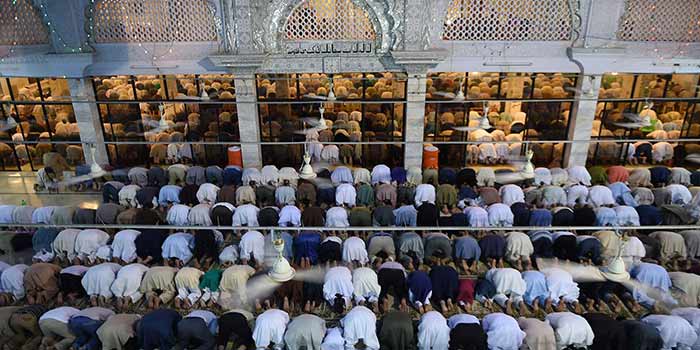
Some people also go to mosques for prayers and meditation. While some
Muslims fast during the day and render nafal, the optional namaz at night.
It may be noted that there is no mention of Shab-E-Barat in the holy book
of Quran. However, Sura Dukhan does mentions about Laila Mubaraka, which,
according to the learned scholars of the Quran and the Hadith, is
Shab-E-Barat.