
Birth of Mahavira, the last Tirthankara - Sunday, 25 April 2021
Mahavir Jayanti is celebrated as the anniversary of Vardhman Mahavir, the founder of Jain religion. Commemorating his birthday on this day, Mahavir was the most revered religious leader in this century and was perceived as a reformer who vehemently opposed the ritualism and false beliefs. The twenty-fourth and last Jain Tirthankara, Mahavir was born in 599 BC and lived for 72 years. He was born of Sidhartha, the Raja of Kundalpura, and Queen Trishala, who was also known by the name Priyakarni.
Prince Vardhamana became extremely penitent and resolved to give up everything worldly. He gave up attachment to his parents, friends and relatives. Distributing all his wealth among the poor, he went to the forest and became a monk. Mahavir practised rigorous austerities, including fasts that lasted many days. He meditated on the pure nature of the Soul. Mahavir lived a life of absolute truthfulness, a life of perfect honesty and a life of absolute chastity.
Mahavira taught that people can save their souls from the contamination of matter by living a life of extreme asceticism and by practising non-violence towards all living creatures. This advocacy of non-violence encouraged his followers - monastic and lay - to become strong advocates of vegetarianism. Mahavira's followers were aided in their quest for salvation by the five mahavatars. Attributed to Mahavira, these great vows were the renunciation of killing, of speaking untruths, of greed, of sexual pleasure, and of all attachments to living beings and non-living things.
The main sects now are the Digambaras and Shvetambaras, with the latter again divided into Deravasis and Sthanakvasis. While the Deravasis visit the temples and worship the statue of Mahavir, the Sthanakvasis emphasise the internalisation of the faith. Mahavir himself was against idol worship.
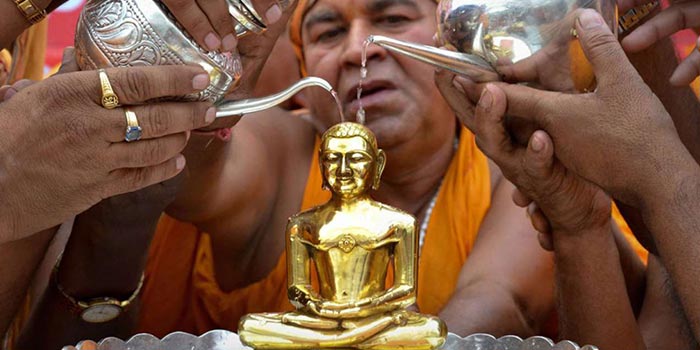
On the day of Mahavir Jayanthi ( Birth anniversary), many members of the community make offerings of milk, rice, fruit, incense, lamps and water to the tirthankar. Some sections of the community even participate in a grand procession.