
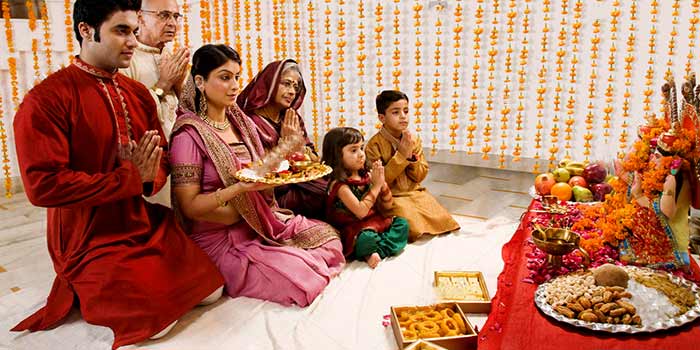
Also called the festival of lights, Diwali is one of the most popular festivals celebrated in India. Diwali or Deepavali is an occasion which is celebrated with lot of enthusiasm in most parts of the country. The day of Diwali witnesses celebrations of the highest magnitude as the entire country is lit with beautiful lights and lot of fireworks are used to celebrate Diwali, a victory of light over darkness. Diwali is also an important Hindu festival where Goddess Lakshmi (Wealth Goddess) is worshiped. For this very reason Diwali is also known as a festival of wealth and prosperity. The festival of Diwali in India brings in lot of excitement across all the sections of society irrespective of their socio-economic background.
The magnificent five days long jubilation of Diwali celebrations is marked by multi-colored Rangoli designs, special pooja ceremonies, lines of lamps, floral decorations, fireworks, exchange of Diwali Sweets and Diwali Gifts that lend grandeur to the Occasions. Every home - lowly or mighty - the hut of the poor or the mansion of the rich - shines with the glow of twinkling diyas or candles to welcome Lakshmi, Goddess of wealth and prosperity.
'Diwali', also called Deepavali or festival of ligths, is the abstraction of the Sanskrit word Deepavali - 'Deep' means diya (small pots made from clay) or light and 'Avali', means a row - meaning a row of diyas or array of lamps. Thus placing small diyas, candles & lamps inside and around the home marks the festival of lights.
The festival of Diwali will be celebrated on Thursday, 4 November, 2021.
Diwali festival is celebrated after 20 days of Dussehra. The five days long festivity of Dipavali celebration begins on the 13th day of the dark fortnight of the month of Ashwin (October / November).Diwali or the festival of lights falls on the Amavasya -the 15th day of the dark fortnight of Ashwin. In the year 2021.
Traditions & Celebrations of Diwali Festival
The First & Second DayThe First day is called 'Dhanteras' which falls on the thirteenth day of the month of Ashwin. The word Dhan means wealth. Believing this day to be auspicious, women purchase some gold or silver or at least one or two new utensils. The Second day is called 'Narkachaturdashi' or 'Choti Diwali' which falls on the fourteenth day of the month of Ashwin. This day therefore is dedicated to lights and prayers heralding a future full of joy and laughter.
The Third day of the festival of Diwali is the most important day which sees colors of firecrackers, lighting of lamps, delicious sweets, new clothes and family get together exchanging gifts. On this day special pooja ceremony is observed to worship Lord Ganesh and Goddess Lakshmi. This is the day when the Sun enters his second course and passes Libra constellation (Nakshtra) which is represented by the balance or scale. Hence, this design of Libra is believed to have suggested the balancing of account books and their closing. Despite the fact that this day falls on an Amavasya (dark night) it is regarded as the most auspicious.
The Fourth & Fifth DayThe grand celebrations of Diwali spread through five days and the fourth day of Diwali festivities is marked with different ways in the various parts of India. In northern part of India this day is celebrated two days after Diwali as Govardhan Puja while in the western parts of India like Maharashtra state the same festival is celebrated as Padva or Bali Prativpada. Govardhan Puja is also known and celebrated as Annakoot that means the mountain of food. On these particular festive days religious pooja ceremonies to seek the blessings of Lord Krishna are observed and special dishes with distribution of sweets are also an integral part of the celebrations.
Festival of Diwali is an exciting occasion for the people of India and it goes without saying that Diwali is incomplete without the delicious recipes which are prepared for Diwali. Lot of effort goes into the the making of Diwali special recipes and sweets including the famous Shahi Paneer, Suji Ladoo, Chana Dal Dhokla, Kaju Burfi, Phirni , Rasgullaand Jalebi. Diwali recipes are an integral part of the festival of Diwali and very much required to make your celebrations all the more fascinating and tempting. Try out more Diwali special recipes on our Recipe section.
On the auspicious Occasions of Diwali the lines of lamps are lit, gifts are exchanged, jewellery is purchased, firecrackers are burst, all these facets of Diwali festival are associated with mythological and historical legends. Read on to know more.
Dipavali is incomplete without Fire Crackers & bursting of crackers is associated with the killing of the frantic Narakasura (Ruler of Pragjyotishpur, Nepal) by Lord Krishna. Lord Krishna's divine mediation led to the liberation of the imprisoned women., as a symbol of victory, he smeared his forehead with that evil's blood. Lord Krishna returned home early in the early morning & bathed with scented oils to wash away the filth from his body. Since then the custom of taking bath before sunrise on this day has become a traditional practice with atleast bursting of one cracker which is an auspicious symbol.
Diwali is the day when King Rama's victory was celebrated in Ayodhya after his epic war with Ravana, the demoniac king of Lanka. Rama & his wife Sita returned after 14 years of exile, ending war in which the whole kingdom of Lanka was destroyed. On this dark night of Amavasya, Ayodhaya was glowed up with rows of lamps, radiating the dark nights to welcome home the king Rama. So, on this auspicious day, the lightening up of lamps signifies happiness & end of bad.
On this day Goddess Lakshmi emerged from the ocean of milk called the Ksheer Sagar. She brought with her wealth and prosperity for mankind. On that day, Lakshmi Pooja was performed to honor her and from then on Diwali day, Hindus worship her every year in the evening. Many people believe that Lakshmi, the Goddess of wealth and good fortune, visit the homes of devotees on this day that is why they keep their places clean & well-lit to welcome her sacred steps.
Diwali Recipes : The Recipes available under this section provide exciting recipes for Grand Diwali Celebrations.
Diwali Car and Bike Purchase : Yes, its true the festival of Diwali witnesses an increase in the shopping for new car and bikes. Check out the newet car and bike launches to buy during Diwali Festival.
Diwali Greeting Cards : Wish everyone a 'Happy Deepavali' through this amazing collection of online Greeting Cards.