
Day of Starting: 9th of July 2013
Day: Friday
Ramzan or Id-ul-Fitr is celebrated on the 1st of 'Shawaal', tenth lunar month of the Islamic calendar immediately after the month of Ramadan. 'Ramadan' is the name of one of the twelve months of the Muslim calendar year. It coincides with the months of October-November. Ramzan is a holy month for Muslims.Ramadan is the time for offering intense prayers to god.
Ramadan is the ninth month in the Islamic Calendar Year, a month when the "Holy Koran or Quran" was revealed up from heaven by Allah for human beings in 615 AD,as a guidance and declaration.
Islamic Calendar is based on the Lunar calendar (based on the moon and not the sun) The practice of fasting during Ramadan is called "Sawm". To start fasting one has to sight the crescent of the new moon with ones' naked eyes. It is a period of worship and contemplation. Muslims usually go to the Masjid and spend hours studying the Quran and recite a special prayer called the Taraweeh (Night Prayer) in addition to the 5 daily prayers.
Throughout the world, Muslims observe the Ramadan month by fasting and through increased concentration for purification of soul to increase closeness with God. It is a period of worship and contemplation. On the 27th evening, Muslims celebrate the Laylat-al-Qadr (Night of Power) with the believe that on this day in 610 AD, the Holy Quran was revealed providing guidance, teaching, direction to all and also judging between wrong and right. Moreover this day is believed to have influenced the course of the year.
Strict constraints are placed. Smoking, drinking, meat and sexual relations are forbidden during fasting. However, children,elderly, soldiers and the incurable sick are exempted. Telling of lies, slander, false oath, betrayal are considered most offensive during Ramadan and can destroy the goodness of fasting.
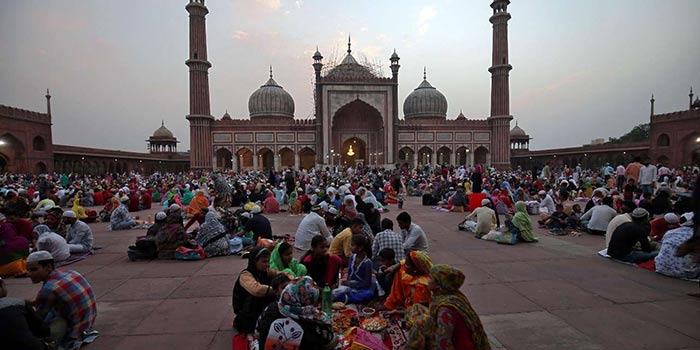
Ramadan is one of the religious festivals of the Islamic community that is widely celebrated all over the world. Although this festival includes fasting and sacrifice, yet the Muslims celebrate this occasion with a lot of joy and enthusiasm. There are fireworks, lights, decorations and feasts (once the daily fast gets over) that make this festival a joyous celebration.
Ramadan includes fasting which is the third pillar of all the five pillars of Islam. This means that the fasting during Ramadan is one of the five most basic beliefs or acts that a Muslim is supposed to do. Fasting in Islam is considered to be a means of practicing self-control. It is also considered to be a way of experiencing what hunger is all about, sympathizing with the poor and the needy, and thanking god for everything you have received in life.
An important part of Ramadan festival is offering gifts in the form of Zakat which means giving away one's wealth to charity. The Zakat is one of the essential pillars of Islam. The concept of Zakat is to purify one's wealth by giving a part of it to people who aren't blessed by god.
Ramadan is the time for offering intense prayers to god. During this month, Muslims try to read the Quran, the holy scripture of Islam, as much as possible. They may also visit the mosque to listen to the recitation of the Quran.
The last 10 days of Ramadan are special because during this time, the Muslims indulge in intense prayers with the belief that they'll get closer to god because of their good deeds, sacrifices, and devotion.
According to Quran, the 27th night of the month of Ramadan, known as the Lailat ul-Qadr or the Night of Power, is actually considered to be auspicious than any other night. So, the Muslims spend almost this entire night in prayers.