
The festival of Zoroastrianism is considered the first universal and monotheist religion in history. It is a small religion with about 140,000 members, yet its importance to humanity is much greater than its current numbers. Zoroastrianism is also known by Zarathustrism, Mazdaism and Parsism.
Zoroastrianism was founded by Zarathushtra (Zoroaster in Greek; Zarthosht in India and Persia). Conservative Zoroastrians believe 6000 BCE as the founding year but Religious scholars and Historians estimate 1000 BCE based on his style of writing. Zarathushtra preached monotheism and was attacked for his teachings. With the support of the King, Zoroastrianism became the state religion of various Persian empires, until the 7th Century CE.
Zoroastrian theology had a great impact on Christianity, Judaism and other religions, particularly with beliefs about God and Satan, the soul, savior, resurrection, heaven and hell, final judgment, etc. Zoroastrianism is one of the oldest religions and may have been the monotheistic religion.
Zoroastrianism theology is strongly dualistic with Zarathustra (God of Good) supposedly having an opponent in Aura Mainyu (God of Evil). Zoroastrianism is also a highly ethical religion.
Avesta is the holy book of Zorastrians. It includes the core, original five hymns of Zarathushtra called the Gathas. Gathas guide towards worship of only one God, understanding of righteousness and cosmic order, promotion of social justice and individual choice between good and evil.
Zoroastrianism lay emphasis on equality of gender, equality of all humans, cleanliness of the environment, Hard work and charity, Condemnation of oppression toward human beings, condemnation of sacrifice of animals. equality of all humans. In Zoroastrianism, the symbol of fire and sun are considered to be "energy of the creator" which are both enduring, radiant, pure and life sustaining.
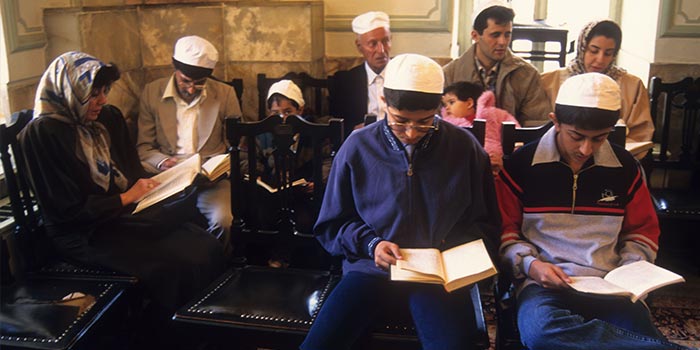
Zoroastrian worship includes prayers and symbolic ceremonies. Rituals are conducted before a sacred fire as a symbol of their God. Zoroastrianism do not usually accept converts. To be a Zoroastrian, one has to be born into the religion, though some dispute it. Members are dedicated to a three-fold path of good thoughts, good words, good deeds.
Inter-religious marriages and recruiting were strictly prohibited but with the onset globalisation Zoroastrianism is becoming more liberal and open.