
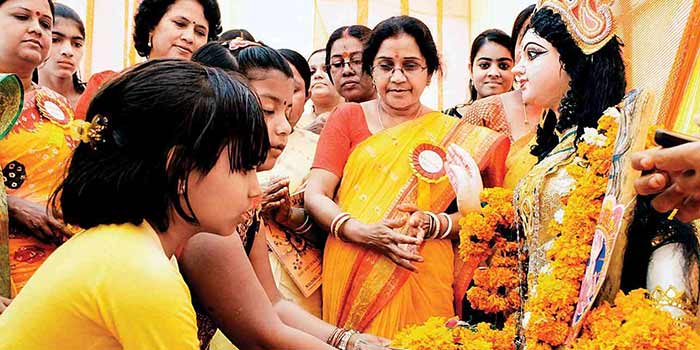
Vasant Panchami heralds the advent ofspring. This festival marks the first day of spring.Vasanta means the spring. The fields are mustard yellow with the ripening of crops. Yellow is a auspicious color - a color of spirituality. VasantPanchami falls on the fifth day of Magh (Jan - Feb)Shukla or the bright of lunar.Saraswati is the consort of Lord Brahma andis the Goddess of Wisdom and Knowledge. She is thepersonification of knowledge - arts, science and crafts.She represents Shakti, creativity and inspiration andpresents herself when the weather is complacent andNature is in its full grandeur. It is a season of inspiration and passion.
The most significant aspect of this day is that Hindu children are taught reading and writing their first words on this day - as it is considered an auspicious day to begin a child's education. Educational institutions organize special prayers for Saraswati on this day. The great Indian guru Pandit Madan Mohan Malviya laid the foundations of the world-class academic institution, Kashi Hindu Vishwavidyalaya on Vasant Panchami.
Saintly people and people inclined towards spiritual progress attach great importance to the worship of goddess Saraswati. As a practice, only educated people and men of principle worship goddess Saraswati for spiritual enlightenment. In their opinion, there can be no comparison between the king and the learned or the spiritually advanced. They believe that the king is honoured within his kingdom, whereas the learned are respected or worshipped throughout the world.
Vasant-panchamiThere are various rituals that are followed in the worshipping of goddess Saraswati. The ones common to all those worshipping Saraswati are that the idol of the goddess is clothed in white, the other predominant colour in the celebrations is yellow, to indicate the onset of spring and the blossoming of mustard flowers. Flowers and wild berries are offered to the goddess and students place their books before the deity and do not do any reading or writing that day. An elaborate puja, with sandalwood, ghee, joss sticks, and incense is done to the sound of shlokas, conch shells, and drums. A ritual not connected to the worship but equally essential to the celebration is that of flying kites on this day.