
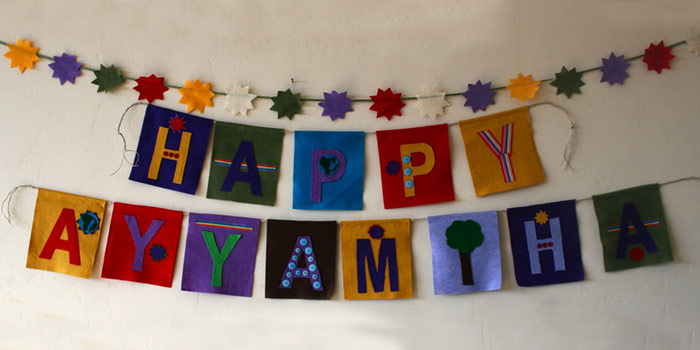
Ayyam The festival of Ayyam-i-Ha is celebrated each year from the evening of February 25 and ends at sunset of March 1. The festival intendeds to spiritually prepare the people for the Fast. The days of Ayyam-i-Ha calls the people to detach themselves from material things by performing special acts of charity, distributing gifts and being hospitable towards others.
The Bahaa calendar consists of 19 months of 19 days each. This means the calender needs 4 days (5 days in a leap year) to equal a solar year. By definition, these days which are added to make up a solar year are called aintercalarya days.
In revealing this Baba calendar, the Bab did not exactly say where to place these intercalary days. Baha'u'llah named these days in the Kitab-i-Aqdas and specified their place in the year.
Ayyam-i-Ha means the aDays of Ha.a aHa is the Arabic letter corresponding to the English aHa and one of the three Arabic letters which make up the word aBaha.a aHa is also the first letter of an Arabic pronoun commonly used in its religious writings to refer to God, or athe Divine Essence.a aHa by itself is used as a symbol of "the Essence of God."
Of this period Baha'u'llah writes, aIt behoveth the people of Baha, throughout these days, to provide good cheer for themselves, their kindred and, beyond them, the poor and needy, and with joy and exultation to hail and glorify their Lord, to sing His praise and magnify His Name. a Thus Ayyam-i-Ha is celebrated with grace by the followers of the Bahaa Faith. They spend time in spiritual activities and are kind and generous towards others.