
Holy Week is the final week of Jesus Christ's life, most tragic yet the most triumphal part of His life.Christians observe it is a week of devout observance, commemorating the Passion and Jesus' death on the cross.
Early Holy Week observances began in Jerusalem in the earliest days of the Church, when devout Christians travelled to Jerusalem to reenact events of the week leading to Christ's Resurrection. In the Christian calendar, holy week precedes the sacred Christian festival of the Resurrection on Easter Sunday. The term "Holy Week" is a recent innovation, but the annual observance of the festivals are of ancient origin.
Holy Week is a very sacred part of the Christian calendar, when Christians observe the death and resurrection of Lord Jesus Christ who takes away the sins of the world. Purpose of Holy Week is to reenact, relive, and feel the passion of Jesus Christ. Important days of Holy week are named Palm Sunday, Maundy Thursday, Good Friday and Holy Saturday. In the Eastern Church, it is called the "Great week".
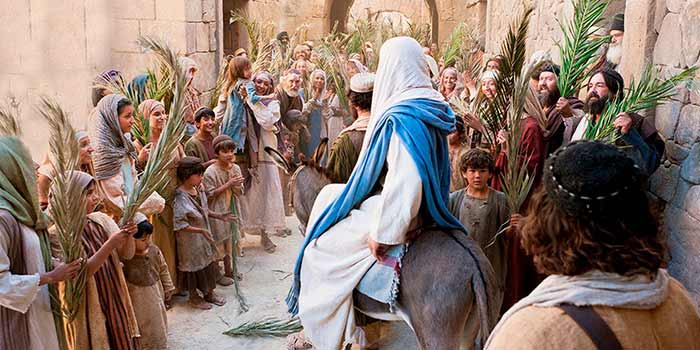
On Palm Sunday, accompanied by his disciples, Jesus rode into Jerusalem on a colt, while crowds of people covered the streets ahead of him with their cloaks and with palm branches symbolizing victory. Many churches observe Palm Sunday services with large palm branches being carried in processions.
Small crosses of Palm leaves are carried by members of Anglican and Roman Catholic churches, to remember the palm leaves which the people of Jerusalem waved when Jesus arrived, and also to remember the cross on which Christ died. Hymns for Palm Sunday usually include Ride on, Ride on in Majesty, and All glory, laud and honour. Songs may include Make Way, Hosanna, and (for children) We have a King who Rides a Donkey. Palm Sunday falls on 20 March 2005.
The word "maundy" originates from the command given by Christ at the Last Supper, that we should love one another. Christians remember 'Maundy Thrusday" as the day of the last supper, and when Jesus washed the feet of all his disciples thereby establishing a ceremony known as the Eucharist. Jesus was betrayed by Judas in the Garden of Gethsemane on the night of "Maundy Thursday '.
To commemorate this Occasions, Roman Catholic church services conducts a ceremony in which the priest washes the feet of 12 people.
Some other churches nowadays also have foot-washing ceremonies as part of their Maundy Thursday services.