
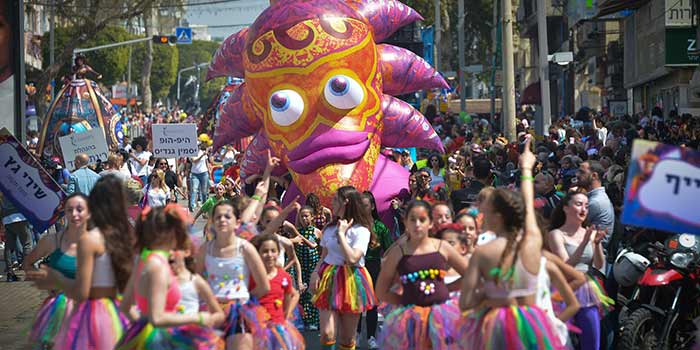
Purim means 'lots' and it celebrates the downfall of a man who wished to wipe out the Jewish people. The Megillah-the Book of Esther, which is read on Purim, tells us to keep the 14th of Adar as a day of joy and happiness. The festival of Purim is known as the festival of hidden miracles Purim falls on the fourteenth and fifteenth days of Adar which is the twelfth month of the Jewish calendar.
According to the legend of Purim, "due to the clandestine intervention of Hashem, using Queen Esther and Mordechai as His messengers, the Jews were spared, and instead the nation of Israel was able to avenge themselves against their enemies".
Purim is celebrated to commemorate this event of defeating the oppressed which is recounted in the Megillah, the scroll of the story of Esther.
Purim is most festive of Jewish holidays. Based on the Biblical Book of Esther, Purim celebrates the profound reversal of fortune when the Jewish community of Persia was rescued by the heroic intervention of Esther and Mordecai. It is a holiday that is known for its pageantry, frivolity and generosity to friends and the needy.
Purim is celebrated by poking fun and dressing in costumes. In fact, interrupting the syunagogue services with noise-making devices is encouraged. Rabbis of the Talmud, usually a quite sober group, say to drink so much on Purim. The Purim delicacy is the hamantashen which is a triangular cookie, with a poppy seed or fruit filling.
On Purim, one should try fulfilling the following commands.
A day before Purim, the Fast of Esther is held . Jews fast the whole day in order to commemorate the fast that Esther fasted before pleading for mercy for the Jew before King Achashverosh.