
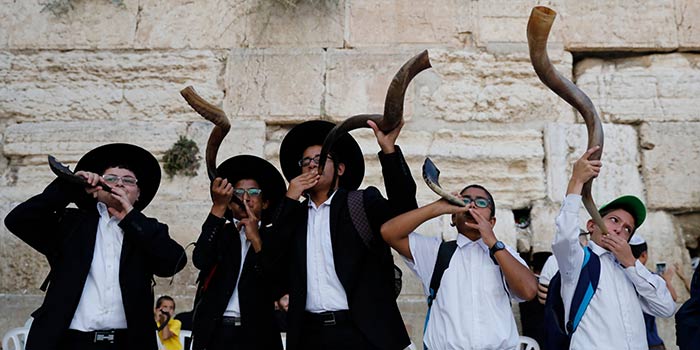
Rosh Hashanah, the Jewish New Year is also known as the " feasts of trumpets". Rosh Hashanah in Hebrew, lierally means "head of the year" or "first of the year." Rosh Hashanah is commonly known as the Jewish New Year. Rosh Hashanah falls in September or October depending upon the solar calendar.
Occuring on the first and second days of Tishri (Seventh Hebrew Month), Rosh Hashanah celebrates the creation of the world and considered a time for reflection and self evaluation. It is one of the Jewish tradition's holiest days, the days when Jews most commonly attend services at synagogue.
To observe Rosh Hashanah, a commandment is found in the second and third books of the Torah, the five books of Moses: " In the seventh month, in the first day of the month, shall be a solemn rest unto you, a memorial proclaimed with the blast of horns, a holy convocation... and you shall bring an offering made by fire unto the Lord ". Leviticus 23:24-5
The first commandment on Rosh Hashanah is hearing the sounding of the shofar The shofar is a ram's horn, a three-thousand-year-old musical instrument that is blown into like a trumpet. Jews believe that the blasts of the shofar revitalize the soul and intelligence of all Jews that listen to it's blasts during Rosh Hashanah.
During Rosh Hashanah eating of bitter or sour food is prohibited. People eat sweet food, including a sweet bread called challah, pomegranates, and apples dipped in honey.
During Rosh Hashanah the people are encouraged to think only good thoughts and to be kind to all those around them. The common greeting during Rosh Hashanah is "L'shanah tovah" meaning "for a good year